INFIGHTING AT THE FA
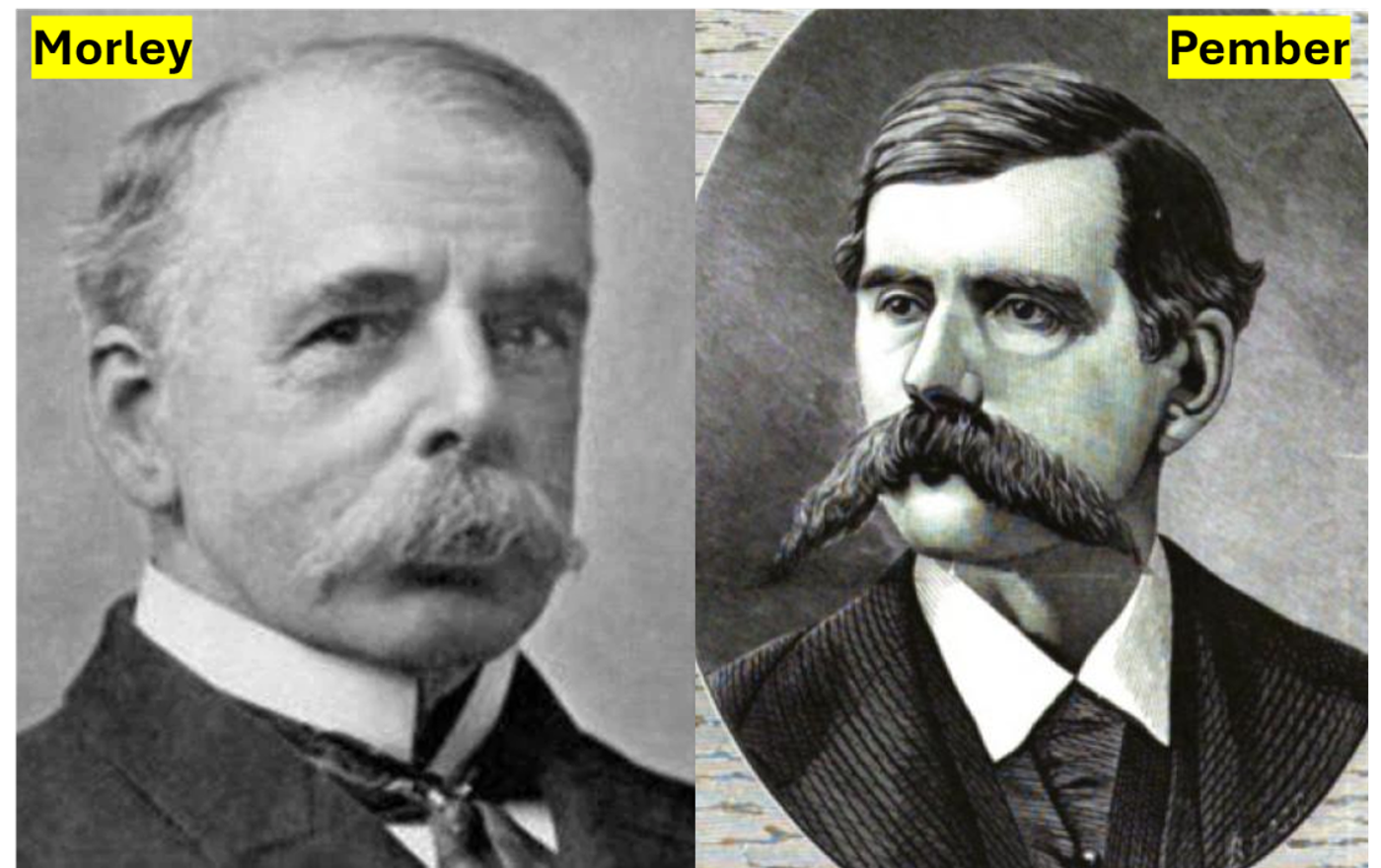
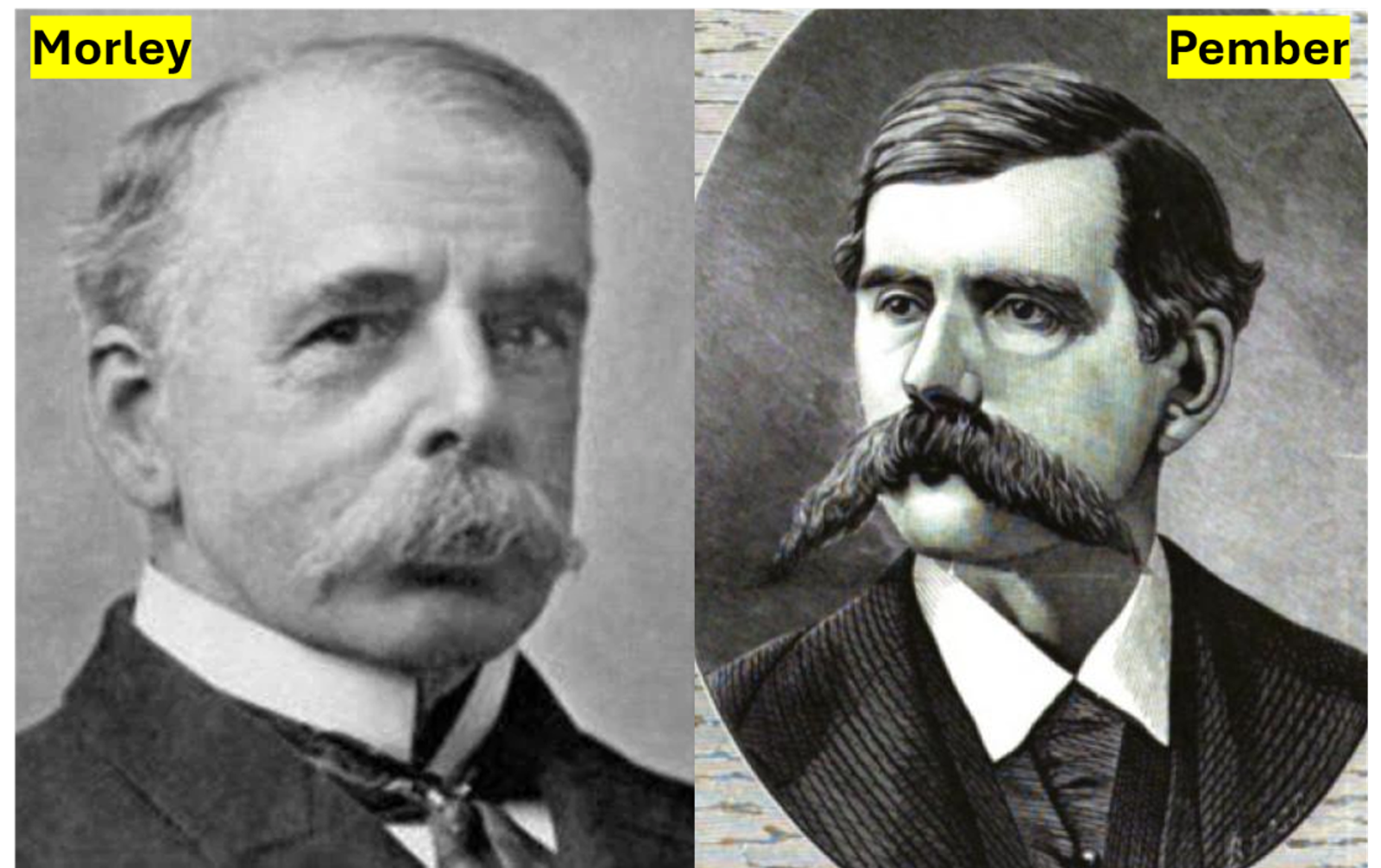
Between the 1863 FA Meetings and the 1866 FA Annual General Meeting there were several rule changes involving both the FA Rules and the Sheffield Rules as both factions tried to test and prove the right ‘game’ to play. Variations of offside, throw-ins, crossbars, pitch and goal sizes, the Rouge, catching, officiation, free-kicks, goal-keepers, and changing ends went ‘to-n-fro’. By 1866 Sheffield had William Chesterman and Harry Chambers leading the Sheffield FC direction for the Sheffield Rules; and in London Arthur Pember and Ebenezer Cobb Morley still drove the FA Rules. Things were about to change!
22nd February 1866
Bell’s Life reported 24th February on the FA Annual General Meeting held on Thursday 22nd February and, before official business commenced, there was heated discussion with clubs stating it was “difficult to play under the associations rules” much to the annoyance of Cobb Morley who had resigned as the Secretary of the FA (some say due to this lack of support for the single code for football/official records say due to work commitments).
Sheffield FC sent no representative to this 22nd February meeting, but William Chesterman, Secretary of Sheffield FC, had written to the FA that Sheffield had “no objections to the proposed alterations to the rules” (sent to him 5th February) and that Sheffield were “decidedly against hacking, throttling or wrestling”. Chesterman proposed a game between London and Sheffield, to be played to the new 1866 rules agreed in the FA meeting, these being the most significant changes to the rules since they were first published in December 1863.This match took place 31st March 1866 at Battersea Park, London.
Following the meeting and the new revised rules Lincoln resigned from the FA.
The Laws of the Game (February 1866)
I.The maximum length of the ground shall be 200 yards, the maximum breadth shall be 100 yards, the length and breadth shall be marked off with flags; and the goals shall be upright posts, eight yards apart, with a tape across them, eight feet from the ground.
II.The winners of the toss shall have the choice of goals. The game shall be commenced by a place-kick from the centre of the ground by the side losing the toss; the other side shall not approach within ten yards of the ball until it is kicked off.
III.After a goal is won the losing side shall kick off, and goals shall be changed.
IV.A goal shall be won when the ball passes between the goal posts under the tape, not being thrown, knocked on, or carried.
V.When the ball is in touch, the first player who touches it shall throw it from the point on the boundary line where it left the ground, in a direction at right angles with the boundary line, and it shall not be in play until it has touched the ground, and the player throwing it in shall not play it until it has been played by another player.
VI.When a player has kicked the ball, any one of the same side who is nearer to the opponents' goal line is out of play, and may not touch the ball himself, nor in any way whatever prevent any other player from doing so, until the ball has been played, unless there are at least three of his opponents between him and their own goal; but no player is out of play when the ball is kicked from behind the goal line.
VII.In case the ball goes behind the goal line, a player on the side to whom the goal belongs shall kick it off from the goal line, at the point opposite the place where the ball is touched by a player with any part of his body; but if a player of the opposite side first touches the ball, after it has gone behind the goal line of his adversary, one "touch down" shall be scored by his side, and in the event of no goals being got on either side, the side obtaining the greater number of "touches down" shall be the winners of the match.
VIII.No player shall carry the ball.
IX.Neither tripping nor hacking shall be allowed, and no player shall use his hands to hold or push his adversary.
X.A player shall not throw the ball or pass it to another.
XI.No player shall take the ball from the ground with his hands while it is in play, under any pretence whatever.
XII.No player shall wear projecting nails, iron plates, or gutta percha on the soles or heels of his boots.
Definition of Terms
“Place-kick" is a kick at the ball from the ground; in any position the kicker chooses to place it.
“Free kick" is the right of kicking the ball without obstruction, such as the kicker may think fit.
"Hacking" is kicking an adversary intentionally.
"Tripping" is throwing an adversary by the use of the legs.
"Knocking on" is when a player strikes or propels the ball with his hands or arms.
"Holding" includes the obstruction of a player by the hand or any part of the arm below the elbow.
"Touch" is that part of the field, on either side of the ground, which is beyond the line of flags.
31st March 1866
London Representative v. Sheffield FC at Battersea Park.
For the match the FA stipulated several conditions:
1.The match shall play to the new February 1866 FA Rules
2.The match shall be played at Battersea Park, London
3.The teams shall be 11-a-side (typically games at the time were 14-a-side but no official ‘rule’ about the number of players existed)
4.The pitch shall be 120yds by 80yds (pitches were still only marked out by flags and goal-posts)
5.The game shall kick-off at 3pm and last 90 minutes (there was no ‘rule’ about the length of the match or about a ‘half-time’) – it actually kicked-off at 3.15pm in very bad weather.
6.The game would be played with a Lillywhite No.5ball (Lillywhite had been closely associated with the FA from its outset – publishing the December 1863 Rule Book)7.London shall wear white shirts and white trousers
The Sheffield FC team had trained to use the FA Rules as these included an offside rule; handling, different throw-in rules, and the wider goal not in the Sheffield Rules .London was mainly Barnes, Wanderers and No-Names. Noticeable names for the London team were Arthur Kinnaird, Charles W Alcock, and EC Morley. London won the game 2 goals and 4 touch-downs to nil.
Sheffield left with their heads held high, but with revenge in mind. In September 1866 they asked London for a return match, to be played in Sheffield at Bramall Lane in early 1867. London were to decline to play.
In the meantime, the primary Sheffield clubs met towards the end of 1866 with the aim of forming the Sheffield FA but wanted to ensure that the Sheffield FA formed with a set of rules that all the Sheffield clubs would sign up to and that made the ‘Sheffield Rules’ more acceptable than the FA Rules.
Click here for more Part 1 of the Formation of the FA 26th February 1866.
Click here for more information about the 31st March 1866 Match at Battersea Park.
Steve Ingall
SHOF Guided Walks Coordinator
email: SHOF.WALKSandTALKS@gmail.com